

Preliminary Demand Sorting (First Step of Procurement
1. Clarify Project Positioning
表格
| Hotel Type | Core Wardrobe Requirements |
|---|---|
| 5-star Luxury Hotel | Mainly built-in customized integration, premium texture, silent hardware, large storage capacity, detailed classified storage, priority on durability with sufficient budget |
| Mid-range Business Hotel | Combination of free-standing and built-in wardrobes, cost-effective, minimalist style, easy to clean, less complex modeling to control overall costs |
| Boutique Resort Hotel | Strong stylized design matching interior scheme, focus on moisture and insect prevention (coastal & Southeast Asian projects) |
| Serviced Apartment / Long-stay Apartment | Large storage space, wear-resistant, sturdy structure for long-term use, simple maintenance, priority on universal spare parts |
For overseas trading projects, additional confirmation is required: target market certifications (EU CE, Australian standards, Middle East fire resistance standards, etc.), sea freight packaging protection and customs compliance requirements.
2. Distinction Between Built-in Wardrobes and Free-standing Wardrobes
(1) Built-in Wardrobes (Fixed to wall after on-site installation)
Advantages: Integrated appearance, no dead corners for sanitation, perfect fit with room layout, high-end visual effect. Disadvantages: Non-movable, installation relies on decoration contractors, high rework cost and long construction period.
(2) Free-standing Wardrobes (Independent finished cabinets)
Advantages: Fully prefabricated in factory, direct placement on site for fast installation, movable and replaceable later, convenient for standardized bulk procurement. Disadvantages: Gaps exist between cabinet and wall, dimensions limited by finished product specifications.
Recommended Scheme for Hotel Projects: Adopt free-standing cabinets for standardized regular room types; apply built-in customized wardrobes for presidential suites, executive suites and irregular layout rooms.
3. Basic Demand List to Confirm Before Order Placement
Room clear dimensions: floor height, bay width, finished wall dimensions, obstacles including columns, fire boxes, electrical boxes and weak current boxes
Reserved facilities: embedded power sockets, light strip switches, safe deposit box compartments, laundry bag storage, integrated foldable luggage bench
Fire protection requirements: flame-retardant veneer, internal fire-proof treatment for cabinets, demand for fire-resistant boards
Service environment: Reinforced moisture-proof treatment required for high-humidity coastal areas, south China rainy seasons and tropical overseas projects
Budget range, delivery cycle, access limits of elevators and corridors for on-site transportation
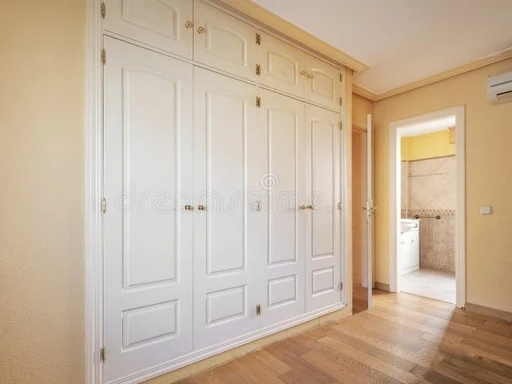
Cabinet Material Selection Comparison (Core of Hotel Wardrobe Procurement)
Hotel wardrobes face frequent opening & closing and drastic temperature & humidity changes. Ordinary household particle boards are not recommended. The following panels are prioritized:
1. Multi-layer Plywood (Veneer Board) – Top Choice for Hotel Projects
✅ Advantages: Excellent anti-deformation performance, better moisture resistance than MDF and particle board, strong screw holding force, suitable for both built-in and free-standing cabinets, ideal for coastal and Southeast Asian humid regions ❌ Disadvantages: Higher cost than MDF; slightly inferior flatness compared with MDF, high cost for complex molding Applicable Scenarios: Preferred base material for cabinet bodies of most hotel suites
2. MDF (Medium Density Fiberboard)
✅ Advantages: Ultra-smooth surface, suitable for molding, grooving, baking paint and film coating with high-grade veneer effect ❌ Disadvantages: Easy to expand and swell when exposed to water, not recommended for humid environments; weak screw holding capacity, loose screws after repeated disassembly Applicable Range: Door panels and molded panels for dry indoor areas, not for cabinet main body
3. Wood Veneer Surface
✅ Premium texture, widely adopted in 5-star hotels ❌ Disadvantages: High cost, prone to thermal expansion and contraction, requiring stable drying treatment; high standard for painting process and easy cracking Note: Solid wood wardrobes are rarely used in hotels; almost all cabinets adopt base boards covered with wood veneer.
4. Particle Board
✅ Lowest cost ❌ Poor moisture resistance and screw holding capacity, easy loose damage under frequent hotel use; Not recommended for large-scale hotel projects, only acceptable for ultra-low-budget budget hotels
Veneer Options
Wood veneer: Standard hotel veneer thickness 0.6mm–0.8mm, avoid ultra-thin 0.2mm veneer which easily shows base board wear; natural veneer preferred, engineered veneer as budget alternative
Melamine veneer: Scratch & wear resistant, high cost performance, primary choice for mid-range business hotels
Baking paint veneer: Premium appearance with high cost, hard to repair after collision, used for high-end projects
Fireproof board: For projects with mandatory flame retardant requirements
Key Moisture & Insect Prevention Standards (For Coastal South China & Overseas Trading Projects)
All boards with moisture-proof treatment, moisture balance paper attached to cabinet back panels; bare board exposure strictly prohibited
Ventilation gaps reserved at cabinet bottom, full sealing is forbidden
Insect repellent treatment for boards applied to Southeast Asian and island hotel projects
Back panels prefer 3–5mm plywood; thin MDF back panels are easy to deform under humid conditions and not recommended
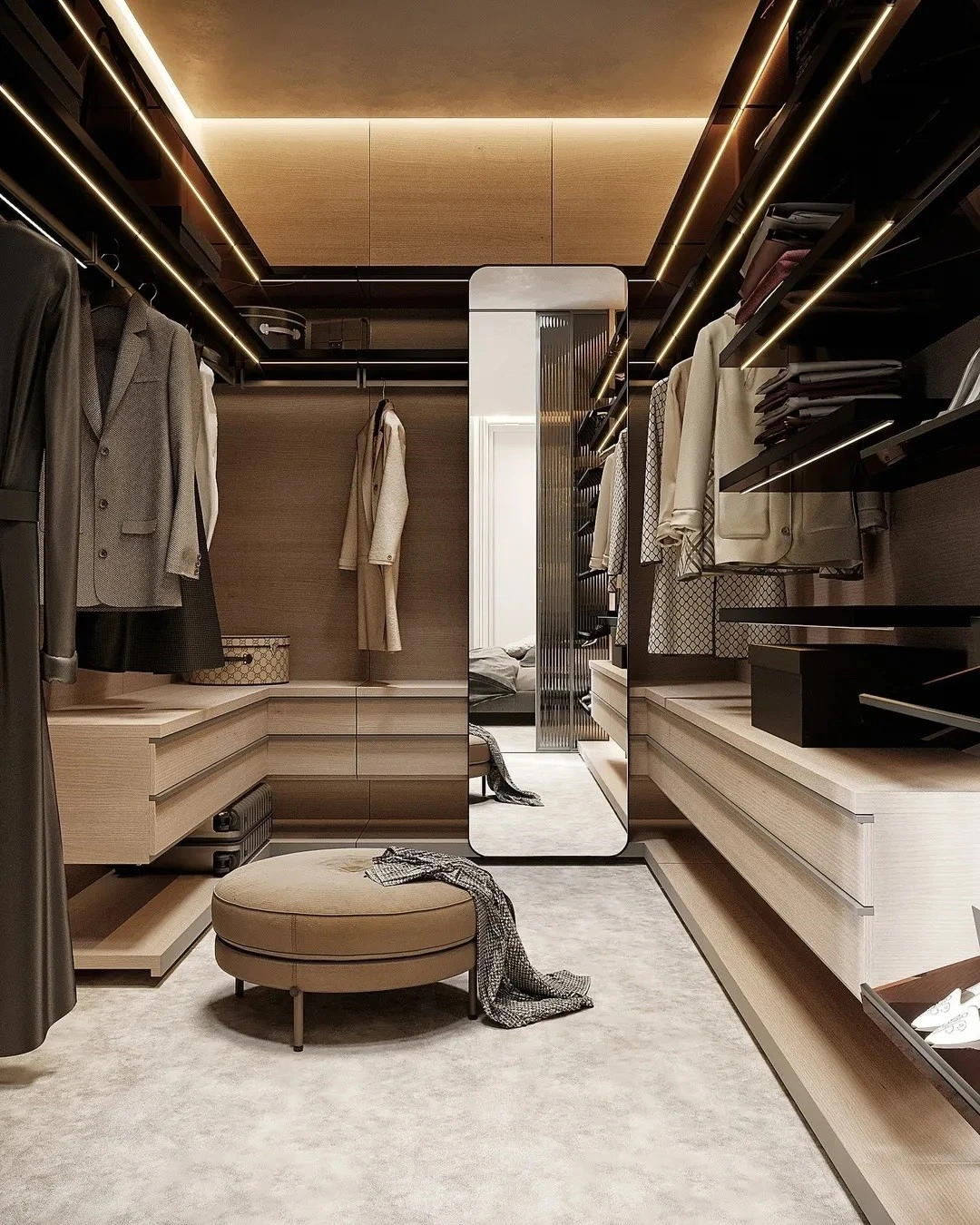
Standard Functional Configuration for Suite Wardrobes
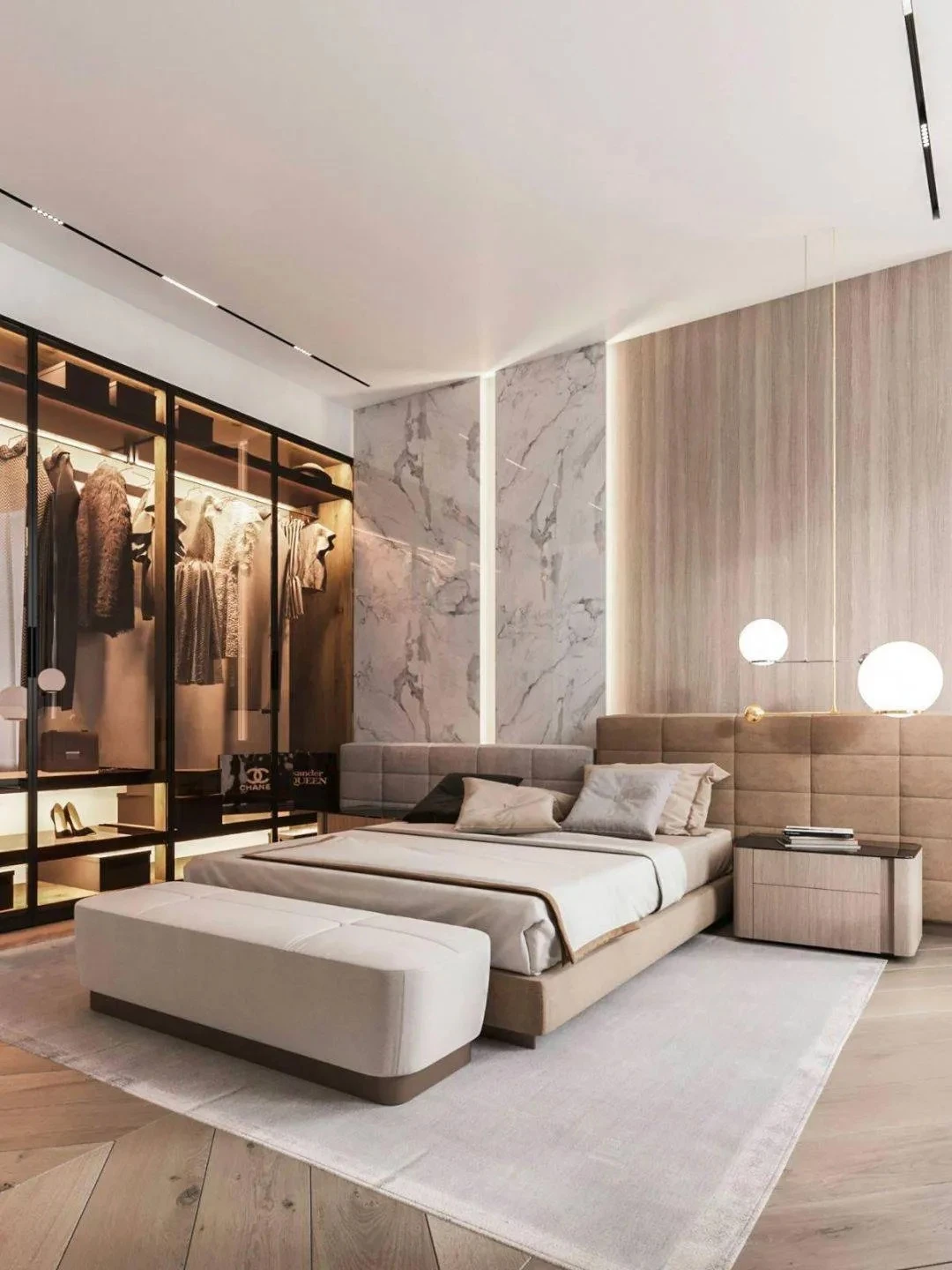
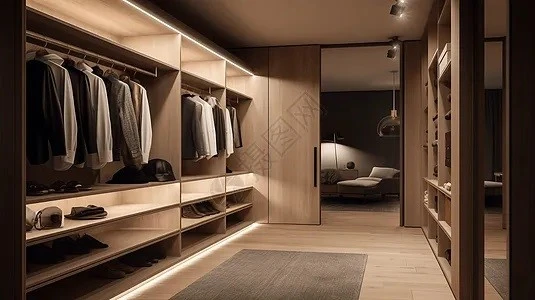
Hotel suite wardrobes differ from household wardrobes, which must integrate clothes hanging, luggage storage, classified storage, safe deposit box placement, sundry storage and laundry service functions.
Standard Configuration List
Clothes rail: Separate long hanging area (formal wear & overcoats) and short hanging area (suits & shirts); both areas recommended for suites. Clear height of long hanging area ≥1400mm; short hanging area ≥950mm. Rail bearing capacity ≥35kg, thin iron rails forbidden; thickened aluminum alloy or stainless steel rails preferred.
Drawers: 2–3 drawers for underwear and accessories, equipped with silent buffer slides
Adjustable shelves: Minimum thickness 18mm; support brackets required for shelves over 800mm span to prevent bending under weight
Trouser rack: Retractable trouser rack strongly recommended for all suites, standard configuration for high-end hotels
Safe deposit box compartment: Standard reserved size W420 × D450 × H220mm with reserved power socket
Integrated luggage bench: Foldable hidden luggage bench to save space, highly frequently used in suites
Lighting system: Built-in sensor light strips that turn on when cabinet door opens; low voltage 12V light strips adopted to avoid high temperature with heat dissipation design
Auxiliary hardware: Clothes hang hooks, laundry bag hooks, slipper storage compartment, umbrella storage area
Common Pitfalls to Avoid
Wardrobe depth: Clear internal hanging depth ≥560mm, minimum 530mm; insufficient depth will crumple clothes and block door closing
Cabinet doors over 2200mm height require segmented design; oversize single doors are prone to deformation
Avoid excessive closed small compartments inside cabinets, which raise costs and reduce space versatility
Hardware Procurement Standards (Determine 5–10 Years Service Life
80% of hotel furniture damage comes from hardware; cost reduction on hardware is not advisable.
Hinges: Hydraulic buffer hinges mandatory, hotel-grade cycle standard ≥80,000 opening-closing times; thickened hinges for heavy doors, double hinge reinforcement for oversized door panels. Cheap non-buffer hinges are forbidden to avoid collision noise.
Drawer slides: 2-section slides prohibited for hotel rooms; 3-section buffered steel slides with minimum 30kg bearing capacity required.
Clothes rail: Thickened aluminum alloy profile with reinforced end bases; plastic bases not allowed.
Sliding door wardrobes: Minimize sliding door design for suites. Sliding pulleys easily jam and produce noise after long-term use. If sliding doors are necessary, adopt thickened aluminum alloy tracks and silent nylon pulleys.
Note for overseas trading projects: Confirm hardware compatibility with local power supply and universal spare parts for easy local replacement and maintenance.
Reference Dimensions for Hotel Suite Wardrobes
Reference Dimensions for Hotel Suite Wardrobes
| Part | Recommended Size |
|---|---|
| Overall external wardrobe depth | 600mm; internal clear hanging depth ≥560mm |
| Long hanging zone height | 1400–1600mm |
| Short hanging zone height | 950–1100mm |
| Drawer height | 120–150mm |
| Shelf spacing | 350–450mm |
| Safe deposit box reserved compartment | Width 420 × Depth 450 × Height 220mm |
| Foldable luggage bench height | 850–900mm |
Cost Reference (Market Reference Only, Subject to Material, Batch & Workmanship
Price only for cabinet body, excluding soft furnishings, electrical appliances and lighting, denominated in RMB
Free-standing wardrobes for budget hotels: ¥1,800–¥2,800/set (plywood base with melamine veneer)
Mid-range business suite wardrobes: ¥2,800–¥5,000/set (plywood with wood veneer, full set of brand buffered hardware)
Custom built-in wardrobes for 5-star luxury hotels: ¥5,500–¥12,000+/set, price fluctuates greatly by modeling, veneer and painting process
Unit price decreases with larger order batches. Built-in wardrobes involve additional costs for on-site measurement, installation and touch-up repair labor fees besides furniture fees.
Technical Specifications & Quality Acceptance Checklist
1. Factory Pre-delivery Inspection
Board Verification: Match base board specifications stipulated in contract, check plywood layers and thickness to prevent substitution with particle board; back panel thickness shall not be reduced
Veneer Inspection: Consistent wood grain without obvious color difference, scratches or blisters; complete edge sealing without glue peeling; all exposed board edges fully sealed, bare boards prohibited
Structural Inspection: Side panels and shelves meet contract thickness standards; screw holes reinforced, anti-bending design for long-span shelves
Hardware Test: Full opening & closing test for smooth buffer without abnormal noise; load bearing test for clothes rails
Painting Inspection: Full paint film without sagging or burrs; narrow splicing gaps between wood veneers
2. On-site Arrival Acceptance
Check collision damage during transportation, cabinet corners are the most vulnerable parts
Cabinet level and verticality inspection; uniform door gaps with error ≤1.5mm, no abnormal noise when opening and closing doors
For humid regions: Inspect intact moisture balance paper on back panels without damp marks
Power on test for light strips to ensure sensitive sensor switches
Risk Reminders for Order, Production & Delivery
Produce pre-production sample cabinet first for signature sealing; mass production shall follow the sealed sample to avoid inconsistent finished goods. Bulk orders without pre-samples are not recommended.
Built-in wardrobe process flow: On-site re-measurement → drawing confirmation → signature approval before production. Modification after production incurs extremely high rework cost and is forbidden.
Sea freight overseas orders: Reinforced packaging with pearl cotton, corner protectors and cartons/wooden cases; anti-collision layout inside containers, full moisture-proof film wrapping to prevent mold during long-distance marine high-humidity transportation.
Spare Parts Allocation: Order 5%–10% spare hinges and slides together with cabinets for convenient later maintenance and replacement.
Targeted Procurement Suggestions for Different Scenarios
Domestic Mid-range Business Hotel Suites: Plywood base with melamine or engineered wood veneer, full set of buffered hardware; prioritize standardized free-standing wardrobes to cut installation and maintenance costs
5-star High-end Suites: Plywood base with natural wood veneer, custom built-in design, complete configuration including retractable trouser rack, foldable luggage bench and built-in sensor light; strict factory sample sealing process
Coastal & Southeast Asian Overseas Projects: Multi-layer plywood as the only cabinet base, MDF for cabinet body forbidden; enhanced moisture-proof treatment, thickened back panels, universal hardware easy to purchase locally, full moisture-proof sea freight packaging
Boutique Resort Hotels: Limit complex carved modeling, concentrate decorative molding on door panels only to guarantee stable cabinet structure


