

Introduction & Scope
This guide is intended for hotel project buyers, interior design firms, contractors and FF&E (Furniture, Fixtures & Equipment) foreign-trade buyers. It systematically covers the key points and verification checklists for public-area luggage benches (also referred to as luggage ottomans or luggage seats) across requirement confirmation, specification setting, material selection, standard compliance, procurement execution, quality acceptance and delivery, serving as a practical reference for procurement decisions and commercial communication.
"Hotel public areas" refer to shared non-guestroom spaces such as the hotel lobby, elevator lobbies, guestroom-floor corridors, lounge and waiting areas, executive lounges, and SPA & wellness zones. Luggage benches primarily allow guests to temporarily rest luggage or bags during check-in/check-out, waiting or relaxation, and may also serve as supplementary seating. They carry both functional and decorative value.
The dimensions, load capacities and workmanship parameters in this guide are general industry reference values; actual figures are subject to the project shop drawings and the technical documents confirmed by both parties. Commercial items such as price and lead time are left as placeholders ("________") and must be finalized with the specific supplier and order.

Product Types & Common Style Categories
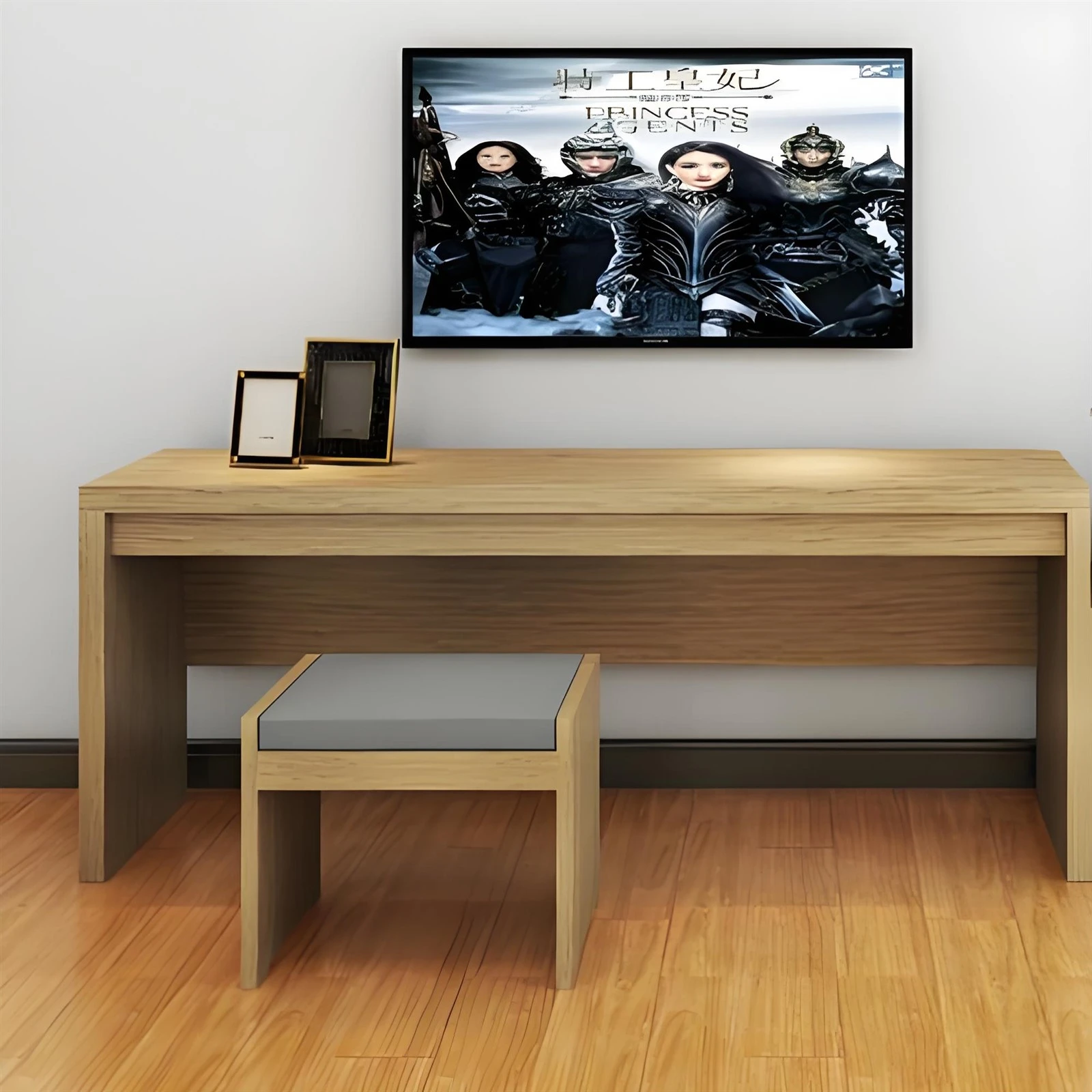
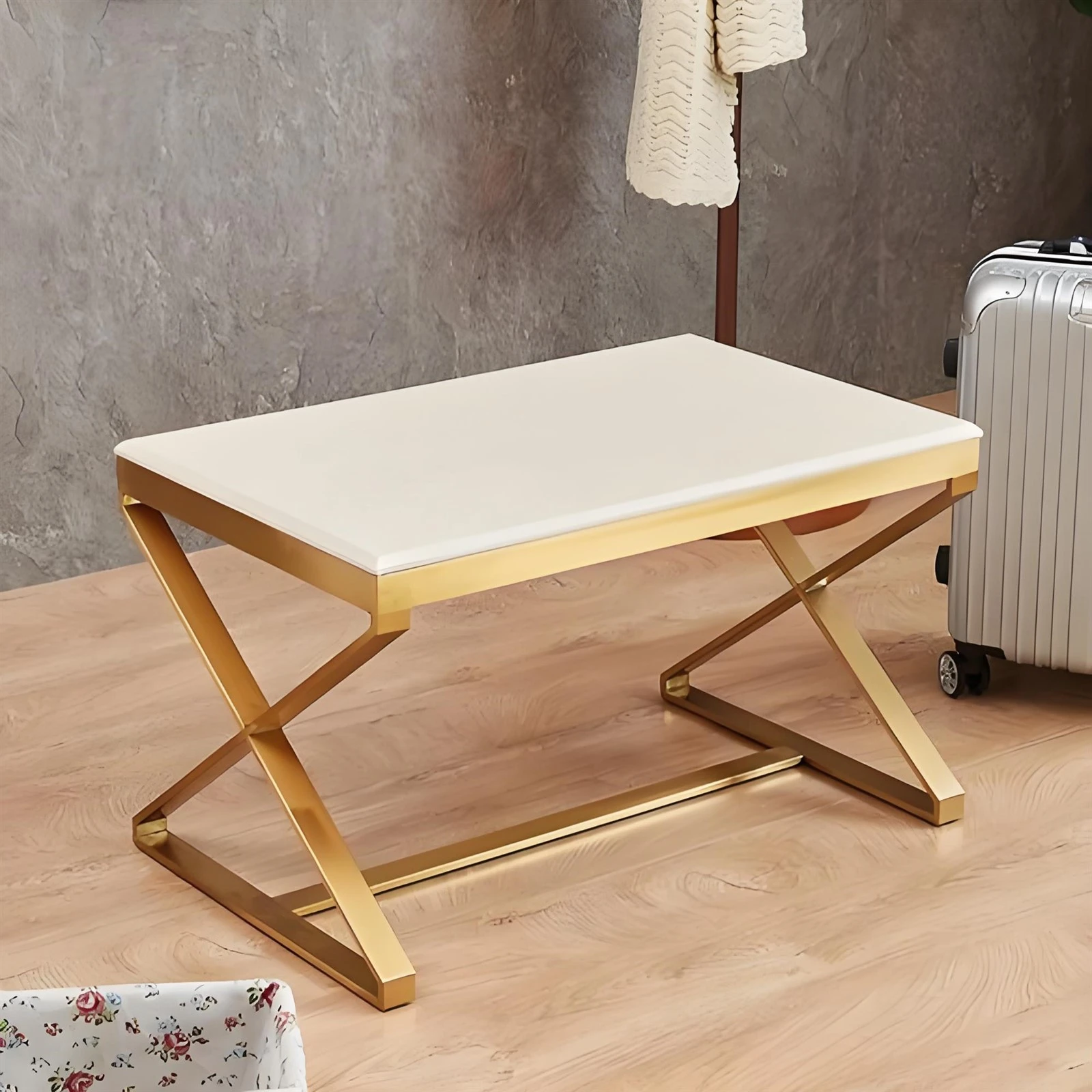
Luggage benches may be categorized as follows by structure, function and public-area location. The project positioning and placement scenario should be defined before procurement:
2.1 By Structure & Form
|
Category |
Key Features |
Typical Public-Area Application |
|
Upholstered Bench |
Upholstered seat/back with high-resilience foam; usually metal or wooden legs |
Lobby, lounge, corridor ends; both resting and seating |
|
Hard-sided Bench |
Wooden or metal seat surface, no upholstery; easy to clean and wear-resistant |
Baggage-dense zones, busy elevator lobbies, entrances |
|
Storage Bench |
Lift-up seat with interior storage |
Executive lounge, rest areas; maximizes space utilization |
|
Modular Bench |
Multiple benches joined, or combined with plant stands/side tables |
Lobby waiting areas, large open public zones |
|
Mobile / Portable Stool |
Lightweight, stackable or caster-equipped; high mobility |
Temporary setups, multi-function event areas |
2.2 By Public-Area Location & Configuration
|
Area |
Recommended Configuration |
Style Preference |
Material / Protection Notes |
|
Lobby |
Grouped placement for waiting and temporary baggage rest |
Mix of upholstered & hard-sided |
Stain- and wear-resistant, water-repellent fabric |
|
Elevator Lobby / Corridor |
Single or pairs, placed against walls |
Hard-sided or low upholstered |
Anti-collision corner guards, moisture resistance, easy cleaning |
|
Executive Lounge / Rest Area |
Elevated grade, emphasis on texture |
Upholstered, storage type |
Premium fabric/leather, concealed hardware |
|
SPA / Wellness Area |
Minimalist, moisture-resistant |
Hard-sided or water-resistant upholstery |
Moisture- and mold-resistant, low maintenance |

Main Dimensions & Specifications
Luggage bench dimensions may be determined with reference to GB/T 3326-2016 "Furniture - Main sizes of tables, chairs and stools", combined with public-area circulation and ergonomics. Common reference dimensions are as follows (actual values per project drawings):
|
Item |
Common Reference |
Notes |
|
Seat Width (W) |
800-1600 mm |
Single or modular depending on layout |
|
Seat Depth (D) |
380-450 mm |
Ensures stable support for luggage |
|
Seat Height (H) |
400-460 mm |
Coordinate with surrounding seating for comfortable use |
|
Overall Length |
1000-1800 mm |
Adapt to corridor/wall width |
|
Load Capacity |
≥ 80 kg (recommended) |
Supports fully loaded luggage and body weight |
|
Leg Clearance |
120-200 mm |
Facilitates cleaning and moisture control |
Note: When placed in circulation paths, reserve sufficient clear passage width (generally ≥ 900 mm) from the outermost edge of the bench to avoid blocking egress and baggage routes; final figures per fire safety and design codes.

Materials & Structural Composition
A luggage bench generally consists of a frame, a seat surface (upholstered layer or hard surface), hardware and surface finish. Materials directly determine durability, load capacity and suitability for public areas.
4.1 Frame Materials
|
Frame Type |
Advantages |
Limitations / Notes |
|
Solid Wood Frame |
High strength, premium texture, repairable |
Control moisture content; protect against moisture and warping |
|
Engineered Wood (Plywood/MDF) |
Dimensionally stable, cost-effective, veneerable |
Mind edge banding and environmental grade; weaker moisture resistance |
|
Metal Frame |
High load capacity, wear-resistant, modern look |
Requires anti-rust treatment; mind welding and surface finish |
4.2 Seat Surface & Upholstery
|
Part |
Common Materials |
Notes |
|
Seat Base |
Plywood / MDF / solid wood |
Ensure flatness and load support |
|
Cushion Foam |
High-resilience foam / polyurethane foam |
Density and resilience must meet requirements; no collapse under prolonged sitting |
|
Fabric |
Polyester, poly-cotton blend, FR fabric, leather/PU |
Public areas prefer abrasion-, stain-resistant and water-repellent fabrics |
|
Fire Retardancy |
FR foam + FR fabric |
Hotel public areas usually require fire retardancy; see Section 6 |
4.3 Hardware & Accessories
Metal legs, connectors, hinges (for storage types), anti-slip glides and corner guards should use anti-rust, corrosion-resistant materials (e.g. stainless steel, electroplated/powder-coated carbon steel), with secure connections and no sharp edges. Hinges and gas struts on storage benches should undergo repeated open/close testing.

Key Technical Requirements & Testing Standards
The following are current national standards commonly referenced for luggage benches (including wooden/metal frames and upholstered parts), for citation in technical documents and procurement contracts:
|
Standard |
Title |
Type |
Relevance to This Product |
Status |
|
GB/T 3324-2024 |
General technical requirements for wooden furniture |
Recommended |
Structure, appearance & physico-chemical properties of wooden frames |
Current |
|
GB/T 3325-2024 |
General technical requirements for metal furniture |
Recommended |
Structure, surface treatment & performance of metal frames |
Current |
|
GB/T 3326-2016 |
Furniture - Main sizes of tables, chairs and stools |
Recommended |
Basis for determining main bench dimensions |
Current |
|
GB 18584-2024 |
Limit of harmful substances of furniture |
Mandatory |
Limits for formaldehyde, heavy metals etc. (in force from 2025-07-01) |
Current |
|
GB 17927-2024 |
Safety technical specification of flame resistance for furniture |
Mandatory |
Fire-retardant performance requirements for upholstered furniture |
Current |
|
GB 8624-2012 |
Classification for burning behaviour of building materials and products |
Mandatory |
Burning-behaviour grading (2025 edition effective 2027-01-01) |
Current |
5.1 Structural Strength & Stability
The frame must be firmly constructed with no obvious loosening; the seat surface should not visibly deform or fail under the design load. Metal-frame welds should be full, free of slag and cold welding, with smoothed weld points. Wooden-frame mortise-and-tenon or connector joints should be reinforced to prevent loosening over long-term use.
5.2 Surface Quality
Wood surfaces should have a smooth, even finish without obvious runs, particles or scratches, with rounded, burr-free edges; metal surfaces should have an even, well-adhering coating/plating with no rust or exposed base. All accessible surfaces should be free of sharp edges, burrs and other safety hazards.
5.3 Mechanical Performance & Durability
It is recommended that benches undergo load, stability and durability testing in accordance with relevant furniture mechanical performance test methods (e.g. static seat load, stability, repeated loading) to verify performance under high-frequency public-area use. Specific test items and acceptance criteria are per the technical agreement between both parties and the conclusions of the accredited testing laboratory.

Environmental & Fire Retardancy Requirements
6.1 Limits of Harmful Substances
The wood materials, adhesives, coatings and upholstery materials used in luggage benches shall comply with the mandatory standard GB 18584-2024 "Limit of harmful substances of furniture" regarding formaldehyde emission, benzene series and migratory heavy metals. Buyers should require suppliers to provide conformity test reports.
6.2 Fire Retardancy (Key for Hotel Public Areas)
Hotel public areas are high-occupancy/commercial premises; the fabric, foam and overall assembly of upholstered luggage benches are generally required to meet a corresponding fire-retardant grade. Domestically, reference may be made to the mandatory standards GB 17927-2024 "Safety technical specification of flame resistance for furniture" and GB 8624 "Classification for burning behaviour of building materials and products". Please note in particular:
1. The required fire-retardant grade for upholstered furniture in hotel public areas (non-guestroom) is usually higher than in guestrooms;
2. For products exported overseas, compliance must be confirmed against target-market standards (e.g. UK BS 5852, US CAL TB 117 / TB 133, EU EN 1021), which cannot be replaced by domestic grades;
3. Fire-retardant treatment may affect fabric hand feel and cleaning methods; confirm the FR process and cost before purchasing.
Procurement Process & Key Milestones
It is recommended to proceed through the following standardized process and to confirm each milestone in writing to reduce rework and responsibility disputes:
|
Stage |
Key Actions |
Output / Deliverable |
Suggested Owner |
|
Requirement Confirmation |
Define public-area location, style, dimensions, quantity, design style and budget |
Requirement specification / technical list |
Owner / Designer / Buyer |
|
Enquiry & Comparison |
Issue RFQs to qualified suppliers; obtain quotations and proposals |
Quotation, technical deviation statement |
Buyer |
|
Sample Approval |
Produce and review physical samples (material, dimensions, workmanship, color card) |
Sample approval record |
Designer / Owner / Buyer |
|
Contract & Order |
Clarify standards, lead time, payment, warranty and breach clauses |
Purchase contract / PO |
Buyer / Legal |
|
Production Follow-up |
Track production milestones, submit testing, mid-term inspection |
Progress reports, test reports |
Buyer / QC |
|
Pre-shipment Inspection |
Final inspection per checklist (see Section 10) |
Inspection report, release note |
Third party / QC |
|
Delivery & Installation |
Delivery, installation, acceptance and sign-off |
Acceptance record, warranty certificate |
Project party / Supplier |

Supplier Evaluation & Selection
It is recommended to score candidate suppliers quantitatively across four dimensions (optional total of 100 points) and retain supporting evidence:
|
Dimension |
Key Points |
Reference Weight |
|
Qualification & Compliance |
Business license, furniture-industry qualifications, quality/environmental systems (e.g. ISO 9001, ISO 14001), complete product test reports |
20% |
|
Capacity & Lead Time |
Production capacity, peak-season capacity, sample cycle, batch lead-time commitments and past delivery record |
25% |
|
Quality & Workmanship |
Raw-material sourcing, craftsmanship, QC process, non-conformance handling, experience on similar hotel projects |
30% |
|
Price & Cooperation |
Quotation reasonableness, payment terms, after-sales response, sampling and customization cooperation |
25% |
Note: In foreign-trade scenarios, prioritize suppliers capable of meeting target-market standards (fire retardancy, environmental, safety regulations) and with export-packaging experience; require traceable test reports.
Quotation & Cost Breakdown
A procurement quotation generally comprises the following cost items. Itemized review helps control budget and facilitates comparison:
|
Cost Item |
Description |
Notes |
|
Materials |
Frame, panels, foam, fabric, hardware, coatings, etc. |
Largest share; determines quality |
|
Labor & Processing |
Cutting, assembly, upholstery, surface finish, QC |
Affected by workmanship complexity |
|
Tooling (if any) |
Moulds for special shapes, custom fixtures |
One-time investment |
|
Packaging |
Moisture film, PE foam, carton/wooden crate, corner guards |
Moisture-proof reinforcement vital for export |
|
Freight & Logistics |
Inland transport, port/airport, export customs clearance |
Foreign trade must account for Incoterms |
|
Taxes & Certifications |
Duties, testing and certification, commissions, etc. |
Per target market |
|
Margin & Risk |
Supplier reasonable margin, FX/risk reserve |
Negotiation reference |
Request itemized quotations to avoid a lump-sum price masking material differences; also specify quantity-tier pricing, expedite charges and excess freight in writing.

Quality Acceptance & Inspection Checklist
Before delivery/shipment, inspect each item in the table below and keep photo records. Sampling rate and AQL (Acceptable Quality Level) may follow the agreement of both parties; full inspection or third-party inspection is recommended for critical items:
|
Inspection Item |
Key Points |
Acceptance Reference |
|
Appearance & Color Difference |
Even color overall, no runs, scratches or color difference |
Consistent with approved sample |
|
Dimensions |
Critical dimensions within drawing tolerance |
Generally ± 3 mm |
|
Structural Firmness |
No obvious looseness or abnormal noise when shaken |
Secure connections |
|
Load Test |
No obvious deformation under seat load |
≥ design load |
|
Upholstery Quality |
Full cushioning, good resilience, even quilting |
No collapse or loose stitching |
|
Hardware & Glides |
Smooth hinges/connectors, complete anti-slip glides |
No rust, no loosening |
|
Environmental / FR Reports |
Provide formaldehyde, harmful-substance and FR test reports |
Comply with current standards |
|
Packaging Integrity |
Moisture-proof reinforcement in place, no damage or damp |
Per packaging specification |

Packaging, Transport & Installation
11.1 Packaging
Luggage benches should be wrapped in moisture film, then packed with cushioning material (PE/EPE foam), corner guards and a carton or wooden crate to prevent impact, moisture and scratches. Export goods should be moisture-proofed (desiccant) and impact-reinforced per sea/air freight requirements, and comply with destination-port quarantine and fumigation requirements (wooden packaging must meet ISPM-15).
11.2 Transport & Insurance
Clarify the Incoterms (e.g. FOB, CIF, EXW) and the point of risk transfer, and arrange corresponding transport insurance; keep a small stock of spare fragile parts. Use proper handling methods for large or fully assembled items to avoid impact damage.
11.3 Installation
Fully assembled products are ready for use on arrival; for items requiring on-site assembly (e.g. modular or caster types), provide installation instructions and a parts list with the shipment, check stability after installation, and dispose of packaging waste.

Common Issues & Risk Notes
|
Risk / Issue |
Impact |
Mitigation |
|
Outdated standard references |
Failed inspection, compliance risk |
Use current effective standards; state standard numbers in sample approval |
|
Fire retardancy not met (public areas) |
Fire-safety acceptance blocked, safety risk |
Public-area upholstery must meet FR grade and provide certificates |
|
Dimensions not fitting circulation |
Blocked passages, rework |
Recheck drawings and on-site clear width before ordering |
|
Color difference / batch variance |
Poor overall appearance |
Require sealed samples and bulk comparison |
|
Moisture content / damp warping |
Structural damage |
Control wood moisture content; moisture-proof packaging |
|
Overseas standard differences |
Returned cargo / certification failure at destination |
Verify certification and testing per target-market standards |
|
Verbal changes without documentation |
Unclear responsibility, cost overrun |
Confirm all changes in writing |


